Molecular fit
Zinc binding and molecular recognition
Removing a metal, recognising a shape and changing a cell are distinct experimental achievements.
Removing and replacing the metal
The serum thymic factor experiment began with a practical intervention: treating the peptide with a metal-binding agent. Its biological activity disappeared in the rosette assay, a cell-based test used in this work. Zinc salts restored activity, with an optimal metal-to-peptide molar ratio of 1:1; other metals worked to a lesser extent.
The authors proposed the name thymulin for the zinc-bound active form. I enjoy that the name carries a chemical condition inside it. The experiment gives a concrete reason to distinguish the peptide without zinc from the active complex.
I underestimated zinc's structural involvement: it initially seemed like an accessory attached to an otherwise finished object. The later review's account of a specific zinc-bound three-dimensional conformation, detected by NMR, makes assembly a better comparison. The relation between the parts changes the object being studied.
An antibody recognises the bound form
In the zinc-dependent epitope study, monoclonal antibodies detected a distinct three-dimensional feature generated by zinc binding. Antibodies against the zinc-coupled form inhibited biological activity as well. Recognition and inhibition appear together in this in vitro experimental account.
I take the inhibition especially seriously. Recognising a feature tells us that a difference can be detected; interrupting activity puts that recognition in a functional setting. Even here, the useful conclusion stays close to the assay. A recognisable molecular form supplies a mechanism to investigate, with a separate clinical question still ahead.

T-cell experiments
A characterisation review drawing on rodent and in vitro work describes zinc-dependent thymulin as promoting T-lymphocyte maturation and modulating T-cell subset functions. Those experimental functions give the chemical account something concrete to explain. The active complex had a role to investigate in cells.
In a separate human bone-marrow precursor experiment conducted in vitro, synthetic serum thymic factor induced T-cell surface-marker expression and E-rosette formation. These are observations about cells in culture. Those particular markers earn my confidence: a change in the markers used to describe cell differentiation is a more definite result than a sweeping claim about strengthening immunity.
Activity, recognition and human serum
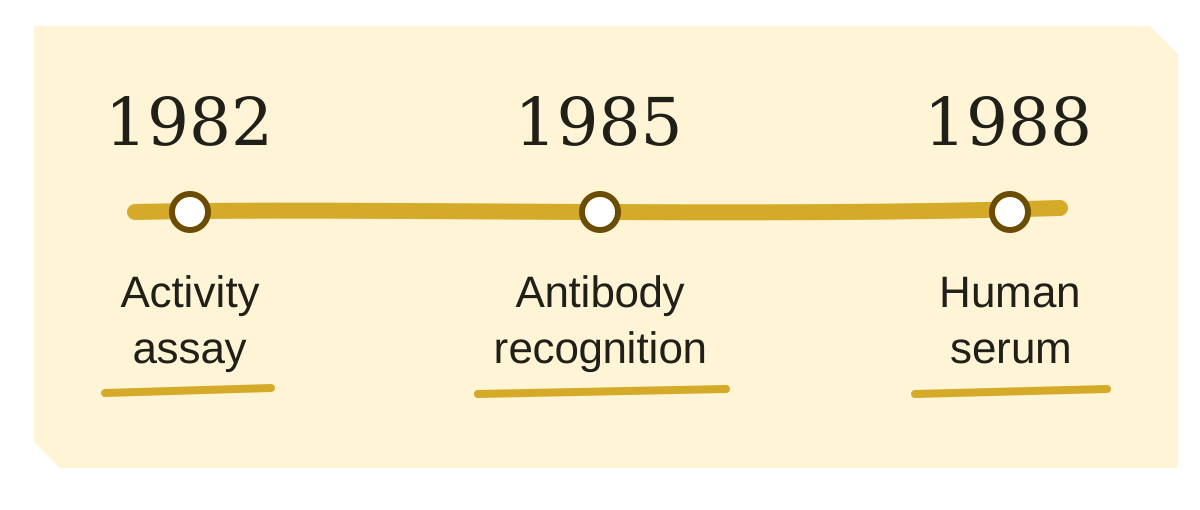
The chronology separates three experimental questions. The metal-removal work tested biological activity; the antibody work examined a zinc-dependent epitope; the human zinc-deficiency work examined serum thymulin activity. Moving along the dates changes the question and the material under examination.